About this website and database
The Altermagnets Database is an online interactive web application to navigate and search a dataset of materials computationally predicted to be altermangets, created by a team spanning Lund University (LU), Luleå University of Technology (LTU), and Linköping University (LiU). The dataset was generated using the high-throughput toolkit, httk.
This website is implemented using the httk-serve user interface engine and is part of the Anyterial collection of databases maintained by the Unit of Materials Design and Informatics at Theoretical Physics, Linköping University (LiU) in Sweden.
Authors of the Altermagnets Database

Materials Design and Informatics, Theoretical Physics, Dept. of Physics, Chemistry and Biology, Linköping University.
Applied Physics, Division of Materials Science, Department of Engineering Sciences and Mathematics, Luleå University of Technology.
NanoLund and Division of Mathematical Physics, Department of Physics, Lund University.
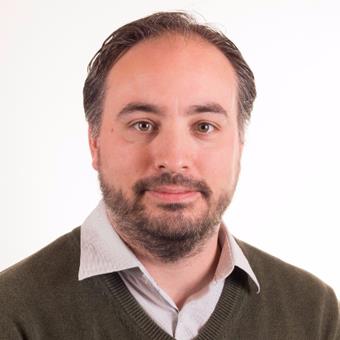
Materials Design and Informatics, Theoretical Physics, Dept. of Physics, Chemistry and Biology, Linköping University.
Contact
To get into contact with the people maintaining the Aletermagnets Database, contact us at: rickard.armiento@liu.se
For help and discussions, please use the Altermagnets Database discussion forum.
News and announcements
The AMDB uses the Anyterial announcement section of our GitHub discussion forum to announce new features, availability of new data, and events we organize related to materials design and discovery (e.g., workshops). You can subscribe to these announcements via a third-party email list service at this subscription link.
The announcements are also available via this RSS link.
Legal and privacy information
Database licensing
Individual database entries, and non-substantial sets of them, and other extracts from the database that do not constitute a substantial part of the database are available under the CC BY-SA 4.0 license. To the extent one can ascribe protection to collections of specifically the "id" database field, even substantial or complete collections of such IDs are available under the same license.
Other than as described above, we retain the rights protecting the database itself and excerpts that constitute substantial parts of it. Hence, if you need to reproduce a substantial part of the database, for example, to publish a data set from a research project where the published data would include (rather than reference via "id":s) large parts of the data we provide, please contact us.
Note: the above statements apply to the database and its contents, and do not cover workflow software or other related software packages. For licensing information for these software packages, please refer to, e.g., their respective source code repositories.
Helpful information on the protection of databases is available, e.g., from europa.eu and the European Intellectual Property Rights Helpdesk (EHD).
Linked third-party services. This website contains links to various third-party services that we use, e.g., to post information related to our activities. These third-party services operate as separate entities from this website and our services. Visits to them are subject to their own respective terms of service and privacy policies.
Interactive structure viewer. The interactive crystal-structure figure on each material page is rendered by CrysViz (AGPL-3.0), embedded in a sandboxed iframe from crysviz.org. The structure and magnetic-moment data are passed to it in the page URL; no additional data is sent.
Cookies. This website does not use cookies.
Website visitor analytics. We occasionally review aggregated anonymized usage statistics based on webserver log data.
Use of AI
Software used in our projects, e.g., for executing computations, analyzing results, disseminating research data, and as part of computational pipelines generating data, are created by humans that use generative and other forms of AI as part of their tools. Generative AI based on large language models (LLMs) can greatly speed up many tasks in programming and data processing, but the final outcome is almost always a result of many iterations with substantial human input to instruct and control these tools.
Acknowledgements
Research generating data for the Altermagnets Database has partially been financially supported by:
-
The Wallenberg Initiative Materials Science for Sustainability (WISE) funded by the Knut and Alice Wallenberg Foundation.
-
The Swedish Research Council (Vetenskapsrådet, VR) grant no. 2022-03090 and 2023-03894.
-
Royal Physiographic Society in Lund and by eSSENCE, a strategic research area for e-Science, grant number eSSENCE@LU 9:1.
-
Olle Engkvists stiftelse, project 207-0582.
The httk software used for high-throughput calculations and the framework for this web application has partially been financially supported by:
-
The Swedish Research Council (Vetenskapsrådet, VR) grant no. 2020-05402 and 2011-042449.
Computational resources:
- The computations were enabled by resources provided by the National Academic Infrastructure for Supercomputing in Sweden (NAISS), partially funded by the Swedish Research Council through grant agreement no. 2022-06725.